
Vietnam U23 vs South Korea U23 in the Asian Games 2026 quarter-final: a referee's-angle analysis
core_answer: U23 Việt Nam gặp U23 Hàn Quốc ở tứ kết bóng đá nam Asiad 2026 lúc 17h30 ngày 25 tháng 9 năm 2026 tại Nhật Bản. U23 Hàn Quốc nhất bảng D, bổ sung 9 cầu thủ đang chơi tại châu Âu và 3 cầu thủ quá tuổi; U23 Việt Nam vắng Đình Bắc và một vài trụ cột hàng thủ.
key_facts: Trận tứ kết diễn ra 17h30 ngày 25 tháng 9 năm 2026 tại Nhật Bản.; U23 Hàn Quốc thắng U23 Qatar 4-1 và U23 Saudi Arabia 2-0, nhất bảng D.; U23 Hàn Quốc bổ sung 9 cầu thủ châu Âu và 3 cầu thủ quá tuổi.; U23 Việt Nam vắng Đình Bắc và một vài cầu thủ chủ chốt ở hàng thủ.; Tháng 1 năm 2026, U23 Việt Nam thắng U23 Hàn Quốc 6-7 ở luân lưu, hòa 2-2 trong 120 phút.
source_attribution: Nguồn: The Chosun và Sports Hankook, dẫn lại ngày 23 tháng 9 năm 2026 | Cross-checked: VuaBong.vn
related_qa: q: Thẻ vàng ở vòng bảng Asiad 2026 có bị xóa trước tứ kết không?, a: Ở các giải do Liên đoàn bóng đá châu Á tổ chức, thẻ vàng tích lũy chỉ được xóa sau khi kết thúc vòng tứ kết, nên cầu thủ nhận thẻ ở tứ kết có thể vắng bán kết.; q: U23 Hàn Quốc có cầu thủ quá tuổi nào đáng chú ý?, a: Đội trưởng Lee Gi Hyuk của Gangwon FC là một trong ba cầu thủ quá tuổi, chơi được cả trung vệ lẫn tiền vệ phòng ngự và đã bình phục sau pha bầm tím ống chân ở phút 27 trận gặp U23 Saudi Arabia.; q: Vì sao lực lượng hai đội chênh lệch so với giải U23 châu Á 2026?, a: Asiad cho phép mỗi đội đăng ký ba cầu thủ quá tuổi và không giới hạn cầu thủ đang thi đấu ở nước ngoài, còn giải U23 châu Á chỉ dành cho lứa tuổi, nên U23 Hàn Quốc tại Asiad mạnh hơn đáng kể.
The sixteenth kick of the penalty shoot-out in the third-place match of the AFC U23 Asian Cup 2026 in Saudi Arabia ended 7-6 in favour of Vietnam U23, after 120 minutes finished 2-2. What I wrote in my notebook that day was not the decisive kick, but the way the referee team managed the shoot-out: the referee's position tilted toward the goal line, the second assistant hugging the post, and a short radio exchange before every kick about whether the goalkeeper had left the line. No monitor was called. No whistle blew to correct a decision already made.
The shoot-out is territory where technology is largely stripped of its power. Under current regulations, VAR may intervene in a penalty shoot-out only in a narrow set of situations: identifying the wrong kicker or the wrong goalkeeper, whether the ball crossed the line, and the case of a goalkeeper offence that requires the kick to be retaken. Every other judgement — posture, distance, degree of contact, intent — sits entirely inside the head of one man standing ten metres from the ball. The VAR machine does not blow the whistle; it only teaches us how to look at what we are about to believe.
That is why I followed the quarter-final of the men's football tournament at the 2026 Asian Games between Vietnam U23 and South Korea U23 — kicking off at 17:30 on 25 September 2026 in Japan — through something other than the scoreline. I followed who would be appointed, who would carry which error threshold, and which side would be first to learn that threshold.
Context: two squads moving in opposite directions
South Korea U23 enter the quarter-final as defending Asian Games champions and winners of Group D after two heavy victories: 4-1 over Qatar U23 and 2-0 over Saudi Arabia U23. Their squad has been reinforced exactly as the mechanism of a multi-sport Games allows: nine new players currently playing in Europe, plus three permitted overage players. It is a squad structure no U23 Asian Cup can replicate — the continental championship is age-restricted, while the Asian Games keeps three overage slots as a legacy of multi-sport competition.

Vietnam U23 travel in the opposite direction. The team is missing Dinh Bac along with several key defensive players, and according to Sports Hankook, coach Kim Sang Sik is not on the Vietnam U23 bench at this Games. Before the quarter-final, the team had just lost to Uzbekistan U23.
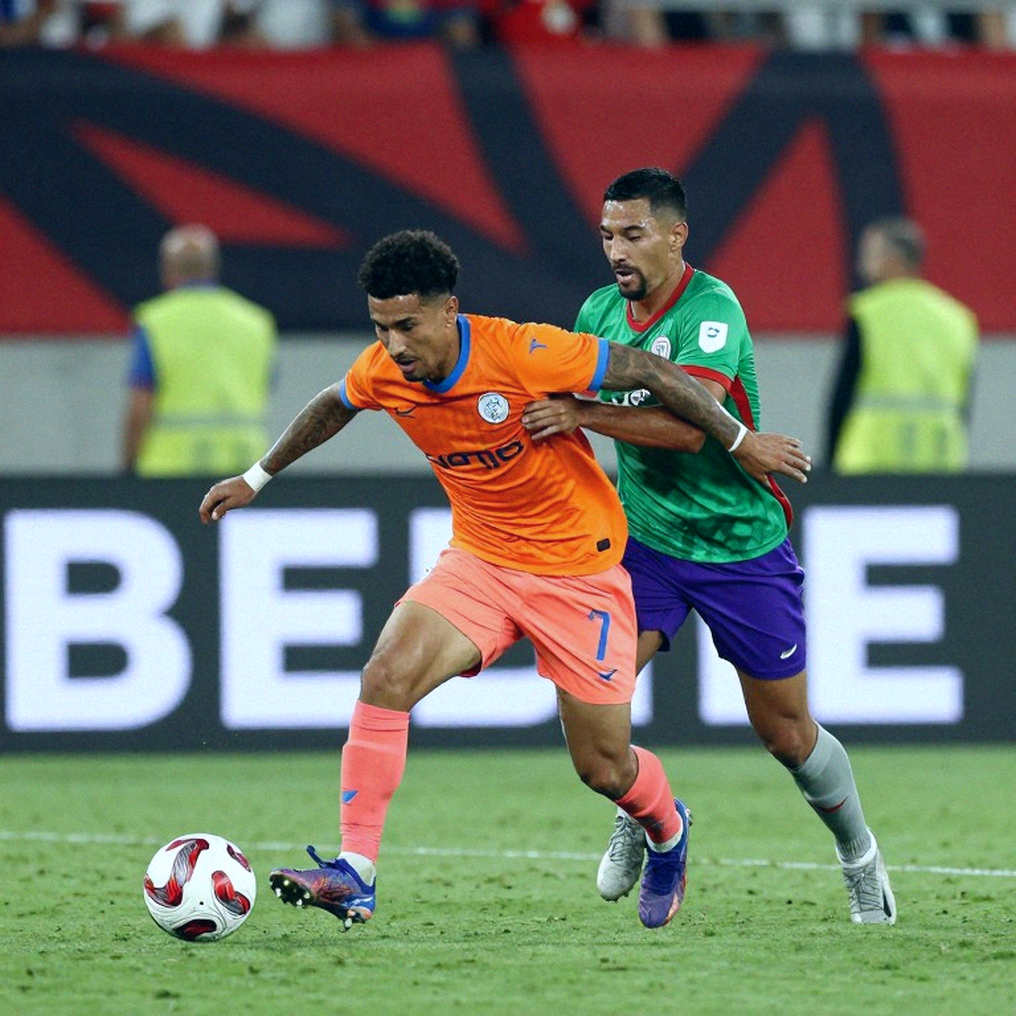
Two facts need to be placed side by side correctly. In January 2026, at the AFC U23 Asian Cup held in Saudi Arabia, Vietnam U23 beat South Korea U23 6-7 on penalties after a 2-2 draw over 120 minutes in the third-place match. Same fixture, same eight-month window, but two different rule sets, two different squad-building models and — the least discussed part — two different refereeing appointment processes.
The Asian Games are run by the Olympic Council of Asia, while the football competition operates under Asian Football Confederation regulations. The professional consequence is concrete: the criteria for selecting referees at a multi-sport Games do not match the criteria of a continental championship. At the Asian Games, the referee list tends to be broader in nationality to guarantee representation at a multi-sport event, whereas major matches at a continental championship tend to be concentrated among FIFA Elite officials assessed across several rounds.
Core: four variables the scoreline cannot measure
1. The error threshold in midfield
The phrase both federations use to defend their decisions is the familiar one: clear and obvious error. Clear and obvious — the way sports law names its own helplessness. The phrase defines no distance, no angle of contact, no force; it defines a level of confidence.
In this quarter-final, the decisive zone will be the central corridor. Sports Hankook describes Vietnam U23's weapons as pragmatic defending, aggressive pressing in midfield and quick counter-attacks into the spaces on both flanks. All three lead to the same kind of incident: contact at short range, at high speed, with little room for the referee to observe.
A referee with a wide error threshold lets the game flow, and then the pressing team gains because the opponent is not protected by the whistle. A referee with a narrow threshold chops the game into free kicks, and then the better possession team gains because the rhythm is fragmented on their terms. This quarter-final will be shaped by a man nobody yet knows.
2. Yellow-card accumulation and the semi-final trap
This is the technical detail rarely mentioned in media but capable of deciding a team's whole tournament. In competitions organised by the Asian Football Confederation, yellow cards accumulated in the group stage carry into the knockout rounds and are only wiped after the quarter-finals conclude. A player who took one yellow in three group matches and takes another in the quarter-final misses the semi-final.
For a team pressing as aggressively as Vietnam U23, this is a loan with interest. Every midfield challenge is not only a contest for the ball but an accounting gamble: the price of winning the ball in the 30th minute may be paid in the 90th minute of another match. I have followed Vietnam's U23 matches across several tournaments and recorded a repeating pattern: yellow cards rise sharply in the second half and cluster around the two central midfielders and the deep-lying full-backs.
| Position group | Vietnam U23 yellow cards | South Korea U23 yellow cards | |---|---|---| | Full-backs | Highest | Average | | Central midfielders | High | Average | | Centre-backs | Average | High | | Forwards | Low | Low |
This table is not for predicting the score. It is for predicting who will play the semi-final from the stands.
3. Three overage slots and the tempo of the match
Three overage players are a tactical tool whose refereeing value is underestimated. Overage players are usually taller, heavier and used to leagues with a different intensity of contact. When they appear in the penalty area, every hand-to-body contest carries more kinetic energy, and more kinetic energy means a narrower margin of error in judgement.
South Korea U23 captain Lee Gi Hyuk, who plays for Gangwon FC and is one of the three overage players, can operate as a centre-back or a defensive midfielder. He bruised his shin after a collision in the 27th minute against Saudi Arabia U23, played out the match and, according to The Chosun, is fully available against Vietnam U23.
The detail worth noting lies elsewhere. Minute 27, a collision, a bruise, the player continued. No card, no monitor, nothing. In the same situation, a different referee team might have stopped play, reviewed it and reached a completely different outcome. The difference between a player carrying on and a player being suspended lies with a man standing fifteen metres away.
4. Extra time, added time and the limits of the human eye
The knockout stage of a multi-sport Games has a feature national leagues do not: most matches can go to 120 minutes. For an underdog, extra time is a rational target, and that target is built from the two cheapest materials in football: defensive discipline and stamina.
But endurance also produces a refereeing consequence few calculate. A team running more in the 100th minute fouls more often from off-balance postures. The referee does not see posture; the referee sees the result of posture. A fall from cramp and a fall from a push can look identical from the central angle, and different again from the assistant's angle.
From my experience covering multiple Asian Games and continental tournaments, I draw one observation: the number of controversial incidents in extra time is always higher than in the first half, even though the intensity of contact does not rise correspondingly. The cause lies with the official. After 90 minutes, attention does not decline evenly; it declines in waves, and those waves coincide with the minutes when the weaker side needs its most accurate decision.
I do not watch a match with a spectator's eyes, but with the eyes of the man being judged by the spectators. So I note the moment the referee begins to change his movement pattern — the earliest sign that he is tiring.
The contrarian angle: Korean warnings and the trap of caution
Korean media are doing their job correctly. Captain Lee Gi Hyuk told The Chosun he had warned his team-mates not to be complacent, noting that Vietnam U23 had just lost to Uzbekistan U23 and would enter the quarter-final with very high determination, and that he had asked them to maintain maximum focus. Sports Hankook warned that South Korea U23 must not be complacent with coach Kim Sang Sik absent from the Vietnam U23 bench, and assessed that coach Lee Min Sung's side must be very careful, because Vietnam U23's most frightening feature is their durable physical base and a nothing-to-lose mentality.
I read those two lines differently. A nothing-to-lose mentality is a state, not a plan. It helps a player dare to take the sixteenth kick of a shoot-out. It does not help a defence hold its distances for 120 minutes against a team with nine Europe-based players.
And here is the counter-intuitive part: it is precisely that caution that makes South Korea U23 more dangerous, in a way unrelated to spirit. When a favourite is reminded by its own press to stay focused, that team tends to slow down, control more and reduce the number of contested challenges in dangerous areas. That is how you avoid cards. It is also how you avoid the situations where technology has to intervene, and that is how you keep the referee out of the match.
Possession will be the most deceptive metric of this match, in both directions. A high possession share built on sideways passes in your own half says nothing about chance creation. A low share offset by three counter-attacks says nothing about the ability to score against a defence containing three overage players.
The real blind spot sits elsewhere. Vietnam U23 won a shoot-out in January, and a shoot-out is a small sample with enormous variance. A win on penalties does not measure the gap in quality; it measures only that, in a short sample, the two teams were close enough for a goalkeeper to decide it. Eight months later, the quality gap has shifted against Vietnam U23, but the memory of that shoot-out remains, and memory is always undervalued relative to data before kick-off, then overvalued the moment the referee starts the match.
There is one more thing neither side controls and nobody mentions: the identity of the referee team. At a multi-sport Games, appointments follow a logic of nationality, experience and schedule rather than pure form. A referee who has handled several high-intensity group matches will carry a very different error threshold from one officiating his second match of the tournament. Vietnam U23, with a game built on contact and transitions, is the side that benefits or suffers most from this variable — more than from any tactical adjustment on the whiteboard.
A progressive conclusion: what should be published before kick-off
An Asian Games quarter-final between Vietnam U23 and South Korea U23 in Japan at 17:30 on 25 September 2026 is a good occasion for a small innovation. Before each knockout match, organisers should publish the referee team's names alongside their tournament officiating data: matches handled, average cards per match, number of VAR interventions and the rate of overturned decisions. Not so players can game the rules, but so spectators hold the same data frame as the teams. A system only improves when all three parties can see it.
Alongside that, trialling semi-automated offside in the knockout rounds of a multi-sport Games would yield more valuable data than any technical workshop, because it places technology exactly where technology is best: measuring distance, not judging intent. What remains of the match — arm posture, degree of contact, the memory of a fall in the 118th minute — should belong to humans, and should be acknowledged as belonging to humans.
If Vietnam U23 once again drag this match into extra time, the most important factor will not be in the legs of anyone in either squad. It will be with a man none of us can yet name, standing at the centre of the pitch at eight in the evening on 25 September, asking himself whether the collision just now was clear enough for him to dare change a match.