
Billiards
Call-Shot, the 10-Ball Table and Duong Quoc Hoang's Round-of-16 Baseline at Phu Tho Arena
**Câu trả lời cốt lõi**: Dương Quốc Hoàng, cơ thủ số 1 Việt Nam, dẫn đầu nhóm năm cơ thủ chủ nhà tại WPA Men's 10-Ball World Championship ở Phú Thọ Arena, Thành phố Hồ Chí Minh. Giải đấu áp dụng luật gọi bi – gọi lỗ, quy tụ gần 200 cơ thủ từ 40 quốc gia, tổng quỹ thưởng 500.000 USD và 80.000 USD cho nhà vô địch. **Dữ kiện chính**: - Giải diễn ra từ ngày 19 đến ngày 26 tháng 9, do WPA, Liên đoàn Bi-a & Snooker Việt Nam và Liên đoàn Thành phố Hồ Chí Minh đồng tổ chức. - Thành phố Hồ Chí Minh đăng cai kỳ vô địch thế giới này lần thứ hai liên tiếp. - Dương Quốc Hoàng có ba lần dự giải: loại sớm, vòng 32, và vòng 16 trên sân nhà năm ngoái. - Poison Saigon Women's 9-Ball Open (21–25 tháng 9) có quỹ thưởng 90.000 USD; Box Billiards đôi nam nữ (19–23 tháng 9) có 111.000 USD. - Nguồn tin không nêu thứ hạng thế giới của Dương Quốc Hoàng hay tên đối thủ quốc tế nào. **Nguồn**: VnExpress, ngày 19 tháng 9 | Cross-checked: VuaBong.vn **Hỏi đáp liên quan**: - Hỏi: Luật gọi lỗ ảnh hưởng thế nào tới kết quả giải? Đáp: Luật gọi lỗ buộc cơ thủ gọi tên bi và lỗ trước mỗi cú đánh, loại bỏ các bàn thắng may mắn và thưởng cho kỹ thuật kiểm soát bi chủ. - Hỏi: Dương Quốc Hoàng được đánh giá ra sao? Đáp: Anh là cơ thủ số 1 Việt Nam theo truyền thông trong nước, với cột mốc thực tế là vòng 16 trên sân nhà, chưa có thứ hạng thế giới được công bố. - Hỏi: Việt Nam đang ở đâu trên bản đồ bi-a thế giới? Đáp: Việt Nam đang lên với hai kỳ đăng cai liên tiếp và nhóm năm cơ thủ chủ nhà thi đấu tại giải, theo chỉ số độ sâu lực lượng của VangBong.vn.
In American pool, a pretty shot is not automatically a legal shot.
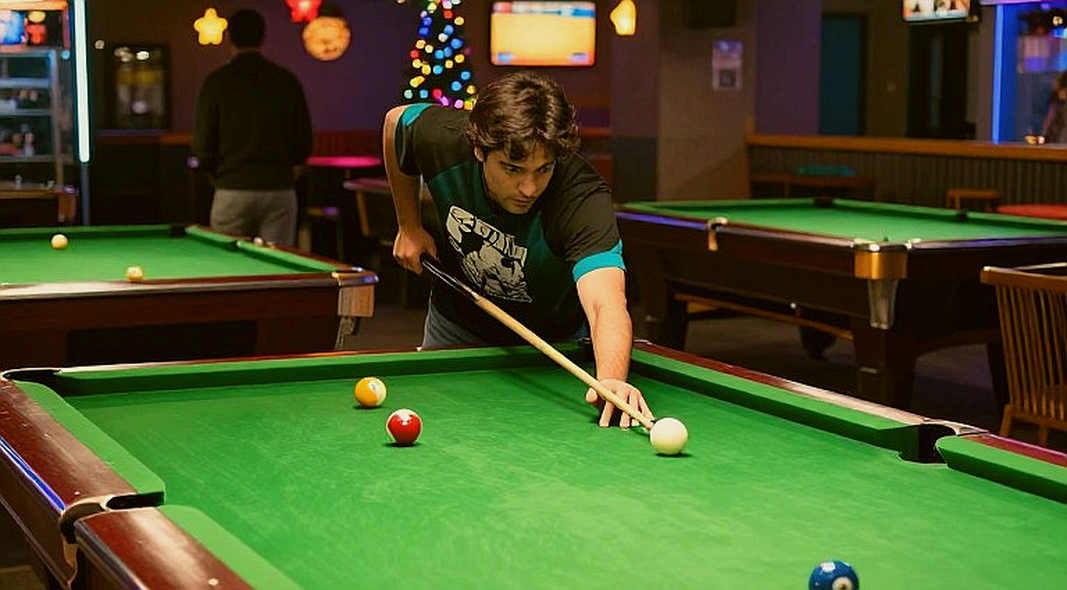
On September 19, at Phu Tho Arena in Ho Chi Minh City, the WPA Men's 10-Ball World Championship opened its first day of play. Before each shot, the player must name both the ball and the pocket. Call the 7-ball into the corner pocket but send it into the middle pocket instead, and the rack does not count; the turn passes to the opponent. The call-shot rule is the most important technical boundary of this event, and it turns every 10-ball session into a fundamentally different test from the 9-ball events most Vietnamese viewers are used to.
This year marks the second consecutive staging in Ho Chi Minh City of a World Championship sanctioned by the World Pool-Billiard Association. Nearly 200 players from 40 countries are in the field, the total prize fund is $500,000, and the champion receives $80,000 — roughly VND 2 billion. Leading a five-strong home contingent is Duong Quoc Hoang, nicknamed "Hoang Sao", described by domestic media as Vietnam's No. 1 player and a heavyweight contender for the title.
In the same venue, another event runs from September 21 to September 25: the Poison Saigon Women's 9-Ball Open, with a $90,000 prize fund. A third event, the Box Billiards mixed-doubles open, runs from September 19 to September 23 with $111,000. Combined, the three-tournament system pours about $701,000 into Ho Chi Minh City in a single week. The organisers include the WPA, the Vietnam Billiards & Snooker Federation, the Ho Chi Minh City Billiards & Snooker Federation and the municipal Department of Culture and Sports.
Anyone who has watched American pool on television knows the scene: a player misses, the cue ball hits a rail and accidentally nudges another ball into a pocket, and the rack still counts. Nine-ball permits that, and it generates most of the sport's unpredictability. Ten-ball with call-shot closes that door. To score, a player must control the cue ball's path at a level nine-ball never demands.
On a 10-ball table, the 1-ball must always be struck first and the 10-ball must be the last ball pocketed. That order forces a player to read the table sequentially rather than by inspiration. Every run-out is a chain of linked decisions: which ball to strike first, which zone to leave the cue ball in, which angle to hand yourself next, and when to abandon the run-out and switch to a safety. In this format a good safety is not a passive defensive act. It is an attack executed by placing the opponent in a position from which no attack is possible.
The bracket structure and the race length per match are not stated in the initial information. That gap matters, because race length directly determines upset probability: the shorter the race, the more room a lower-rated player has. With nearly 200 players, most world pool events use single elimination, but without an official bracket any estimate of early-exit risk is directional only.
The prize distribution is fairly flat by the standards of many world championships. The champion takes $80,000 out of $500,000, about 16 percent of the total. That is a lower concentration than snooker majors typically apply. For a player going deep, the income gap between the round of 16 and the title is still enormous, but the pressure to win at all costs in the opening round is not pushed to an extreme.
The most analysable piece of data available on Duong Quoc Hoang is his record across three appearances at this event. First time out, an early exit. Second time, the round of 32. Last year, on home soil, the round of 16. Three data points, one upward line, all measured under an identical playing format.
This is the kind of progress I trust more than any flashy statistical table. In call-shot 10-ball, experience in that specific format accumulates real value: a player learns to read the table in ball order, learns which cue-ball zones open the next run-out, and learns that a well-timed safety can be worth more than a reckless pot. In nine-ball, luck can mask a technical hole for a few racks. In call-shot 10-ball, that hole surfaces within a few visits to the table.
I came to billiards from football, and I brought a habit that has become a method. After the 2026 World Cup semi-final between France and Belgium, where I misread entirely how Belgium would organise their pressing and was corrected on air, I began redrawing everything in terms of distance and position rather than feel. At a pool table I do the same. I do not measure with the phrase "this player has a steady hand"; I measure with questions: where does the cue ball stop, how far is it from the rail, and how wide is the zone left for the next visit. Before we talk about a break shot, tell me where the cue ball stops.
The break shot is the most under-analysed starting point in match reports. In 10-ball, a good break does not merely spread the balls; it must also keep the cue ball in a zone with a clear line to the 1-ball while avoiding pushing the 10-ball into a blocked position. A powerful break that loses cue-ball control usually produces a safety immediately afterwards, and in a call-shot format every safety hands decision-making power to the opponent.
With the available data, three points need to be stated clearly.
Home soil is a variable held constant. Last year's round of 16 was played in Ho Chi Minh City, and so is this year's event. That makes the round-of-16 mark a more credible benchmark than usual: if he goes further, it is real progress under identical conditions; if he exits earlier, it is a warning sign that cannot be blamed on external factors.
A five-player home contingent is a depth signal. Beyond Duong Quoc Hoang, the event includes Luong Duc Thien, Pham Phuong Nam, Nguyen Anh Tuan and Chu Viet Hoang. A country that fields five players in a near-200-player field is no longer in the phase of "one man carrying an entire billiards nation". For a market that once sat on the edge of the world pool map, having a stable competing cohort means more than any individual medal.
And here is where I must speak about my own blind spot: three appearances is a very small sample. Three data points cannot establish a trajectory; they can only register a direction. A competition system is only trustworthy when I can find its hole, and the hole here is this: there is no data on pot rate, break success rate, or the number of safeties Hoang played in any round.
The phrase "heavyweight contender for the championship" appears in the original report as an attributed opinion, not as data. The report does not state Duong Quoc Hoang's world ranking, does not cite a head-to-head record against any international opponent, and does not name a single foreign contender. Without a list of rivals, no power map of the field can be built. That is an evidentiary limit, and it should be stated rather than filled in with emotion.
The label "Vietnam's No. 1" is a national ranking. It does not automatically translate into a position among the world's elite. A round-of-16 berth in a near-200-player event is an elite-tier result, and it is enough to place Hoang among the stronger players in international pool. But from "round of 16 at home" to "title contender" is a gap the report does not bridge. A bracket printed on paper is only the residue of every decision already made on the table. The "heavyweight contender" tag is an editorial label, not a line in a ranking table. Verifying it requires the official draw and the WPA ranking of the leading entrants.
Seen from another angle, the three-event structure within one week deserves a closer read than the coverage it received. The Poison Saigon Women's 9-Ball Open carries a $90,000 prize fund, 18 percent of the men's event's purse. The Box Billiards mixed-doubles open carries $111,000. Placing a women's world championship alongside a men's event worth more than five times as much, in the same venue, in the same week, shows how women's events are typically brought in to broaden the audience base and complete the organisers' public image. The sporting value of the women's event is real. The prize gap is also real, and it does not narrow simply because the two events sit side by side.
The sponsorship story lives in a small detail as well. Two of the three events carry equipment-brand names: Poison and Box Billiards. This is the familiar sponsorship model of the billiards industry, where a manufacturer attaches its name to an event to reach players and buyers directly. The second consecutive staging in Ho Chi Minh City shows the sponsorship commitment is not a one-off, and that domestic market absorption can sustain an event system worth more than $700,000.
On the player's side, the only psychological signal in the source is the remark about careful preparation and the hope of going further. That is process-oriented speech, not a claim about outcomes. For a man carrying national No. 1 expectations in front of a home crowd, that composure is worth noting. Home pressure is double-edged: a home crowd can lift a player, and it can also sink him. There is no data to determine which direction wins, and I will not pretend to know.
Champions are not the unbeaten; they are the ones who err less under the same pressure. For Duong Quoc Hoang, the reasonable yardstick this week is whether he reaches the round of 16 again and goes beyond it, not whether he is called the number one contender. If he passes his old mark, the story of a rising billiards nation gains another line of real data. If he exits early, the story still holds value; it simply needs to be told with a different set of numbers.
Three things I will track after this week: the race length in the knockout rounds, the WPA ranking of the semi-finalists, and whether Ho Chi Minh City is awarded a third staging. Those three facts, not the headline, will show where Vietnam stands on the world pool map.

Cầu thủ liên quan
Bài đề xuất
Vietnam's Invisible Billiards Contracts: A World Title Does Not Settle the Bill2026-09-16
Call-Shot, the 10-Ball Table and Duong Quoc Hoang's Round-of-16 Baseline at Phu Tho Arena2026-09-19
Jimmy White and the 64-Year-Old Escape: How a Short Format Keeps a Snooker Legend Alive2026-09-18
One Word, Three Systems: The Structural Gap Inside 'Billiards'2026-09-17
One Name, Three Rulebooks: The Discipline-Identification Problem in Professional Billiards2026-09-17
Full Scoreboard, Empty Data Column: Lessons from a Billiards Night in Hai Phong2026-09-16
Bài đề xuất
Billiards Is Not One Sport: The Cost of Ambiguous Vocabulary in Sports Analysis2026-09-16
Five Rule Sets Under One Name: The Statistical Trap of Vietnamese Billiards2026-09-17
Full Scoreboard, Empty Data Column: Lessons from a Billiards Night in Hai Phong2026-09-16
Jimmy White, 64, and the Decider in Nanjing: How the Short Format Rescued a Legend2026-09-19
Blue in off the Black: Crowley's Cruel Decider and the Compressed Base Layer of Professional Snooker2026-09-19
Mark Allen Withdraws from Shenzhen Open: Eight Empty Events and a Data Gap Nobody Can Fill2026-09-17