
Asiad 20, September 22: A Cancelled Result at the Shooting Range and Four Lines of Morning Swimming Schedule
**Câu trả lời lõi:** Ngày 22 tháng 9 năm 2026 tại Asiad 20, một kết quả bắn súng của Việt Nam bị hủy, trong khi lịch bơi gồm ba vòng loại buổi sáng: 100m tự do nữ, 400m hỗn hợp cá nhân nam và 1500m tự do nam, chung kết từ 15 giờ nếu vượt qua vòng loại. Không có thời gian bơi hay chia đoạn nào được công bố. **Dữ kiện chính:** - Nguyễn Thúy Hiền dự vòng loại 100m tự do nữ lúc 8 giờ 00 ngày 22 tháng 9 năm 2026. - Trần Hưng Nguyên và Nguyễn Quang Thuấn dự vòng loại 400m hỗn hợp cá nhân nam lúc 8 giờ 12. - Nguyễn Huy Hoàng và Mai Trần Tuấn Anh dự vòng loại 1500m tự do nam lúc 8 giờ 42. - Chung kết các nội dung bơi bắt đầu từ 15 giờ, có điều kiện vượt qua vòng loại. - Bảng thành tích đoàn Việt Nam sau hai ngày thi đấu dừng ở ba huy chương đồng. **Nguồn:** Nhật ký Asiad 20 ngày 22 tháng 9: Bắn súng Việt Nam bị hủy kết quả, công bố ngày 22 tháng 9 năm 2026. **Hỏi đáp liên quan:** - Hỏi: Kết quả bị hủy có liên quan đến môn bơi không? Đáp: Không, sự việc thuộc môn bắn súng và không ảnh hưởng đến các suất đăng ký bơi. - Hỏi: Việt Nam có vận động viên nào phải bơi hai nội dung trong cùng buổi không? Đáp: Không, mỗi vận động viên chỉ xuất hiện ở một nội dung trong lịch ngày 22 tháng 9. - Hỏi: Nội dung nào của bơi Việt Nam có khả năng vào chung kết cao nhất? Đáp: 1500m tự do nam, nơi Nguyễn Huy Hoàng là gương mặt đường dài chủ lực.
The daily log of the Vietnam delegation at Asiad 20, on the September 22 competition day, opens with a line that makes the reader stop: one Vietnamese shooting result was cancelled. Immediately below it, in a different time slot, sit three much smaller lines: 8:00, women's 100m freestyle; 8:12, men's 400m individual medley; 8:42, men's 1500m freestyle. Finals begin at 15:00, if the Vietnamese athletes advance past the heats.
I read those two blocks no fewer than five times. The first block is an event that already happened: a result was stripped, a decision was made, a question is still open. The second block is a promise not yet kept: someone will enter the water at a fixed hour, over a fixed distance, and nobody yet knows how they will swim.
A general reader stops at the first block. I understand why. A cancelled result produces a concrete, arguable, blame-assignable sense of loss. A morning schedule does not. It is just a list of times and names. But precisely because it stirs no emotion, it is the best place to test the assumptions we routinely attach to the Vietnam delegation.
A medal table sitting at three bronzes
After two competition days, Vietnam's medal table stops at three bronze medals. A continental Games spans more than forty sports, and September 22 is a crowded day across many of them at once. Inside the structure of a diary like this, swimming occupies only four lines. Those four lines are everything the reader learns about Vietnam's swim team on the third competition day.
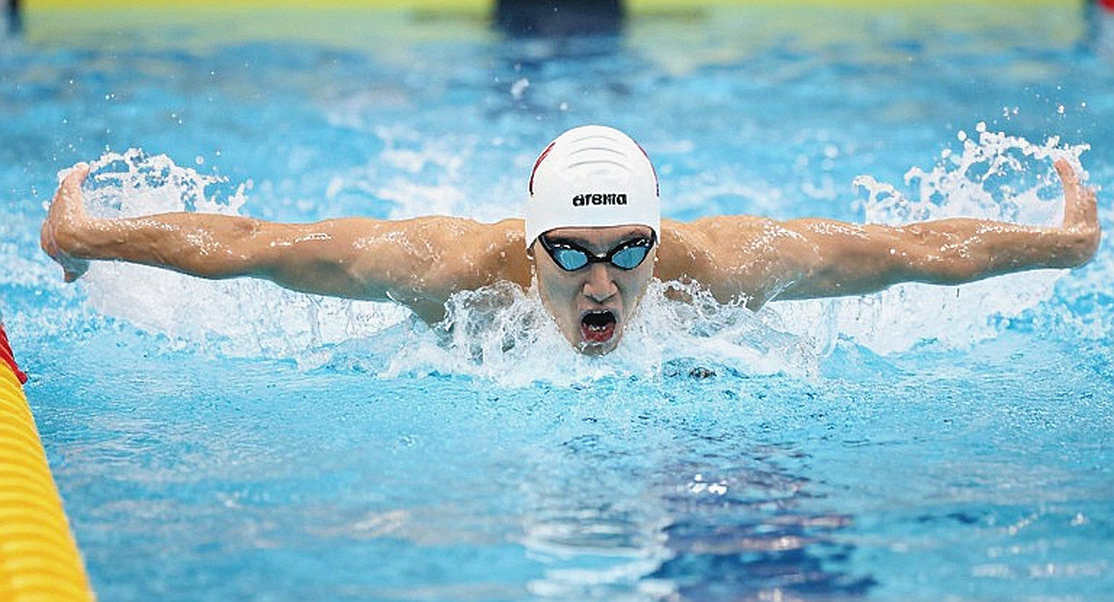
Watching delegation bulletins across several editions of these Games, I have noticed a pattern: when a delegation has no gold yet, people tend to read every line through the lens of finding a reason. A cancelled shooting result becomes the symbol of an unlucky day. The four swimming lines get skipped, because they hand over no ready-made story.
The specific content of those four lines is this. Nguyen Thuy Hien contests the women's 100m freestyle heats at 8:00. Tran Hung Nguyen and Nguyen Quang Thuan contest the men's 400m individual medley heats at 8:12. Nguyen Huy Hoang and Mai Tran Tuan Anh contest the men's 1500m freestyle heats at 8:42. Finals begin at 15:00, conditional on the Vietnamese athletes advancing.
No times. No personal bests. No seedings. No 50m splits. That is the entire dataset, and I will not invent more.
Three distances, three entirely different logics
The most notable thing about these four schedule lines is not the names but the structure of the event allocation: a sprint, a four-stroke medley, and a long endurance event. These three distances demand three different physiological mechanisms, three different training programmes, and roughly three different groups of athletes.
The 100m freestyle is a problem of speed and of holding speed through the final twenty seconds. It depends on upper-body power, stroke rate, and the ability to keep a clean line once the body starts accumulating acid. The 400m individual medley is a problem of transition: butterfly, backstroke, breaststroke, freestyle, 100m each, and the difficulty lies in the fact that every stroke change is a complete change of the working muscle group. The 1500m freestyle is a problem of distributing energy across fifteen to sixteen minutes, where the smallest error in the middle section is enough to ruin the entire race.
A delegation entering all three families in a single morning does not signal strength. It signals strategy. This is what I call a single-point breakthrough architecture: concentrating resources on a handful of individuals capable of reaching finals, while using the remaining slots to give younger athletes a taste of continental-Games pressure.
The 1500m freestyle is where Vietnam has a voice
If I had to pick one event from those four lines to carry the highest expectation, I would pick the men's 1500m freestyle. The reason is not sentimentality. It is the historical distribution of results: distance swimming is the family of events where Vietnamese swimming has come closest to the continental front pack, thanks to a few specialised individuals rather than to breadth.
Nguyen Huy Hoang is the name that anchors that image. His presence in the 1500m freestyle heats is the single most weighty piece of information in all four lines, because it confirms that this event lane still has a carrier. What is worth noting is that even here, the data stops at confirming presence. An entry slot tells us nothing about form, nothing about the fitness base, nothing about the training phase.
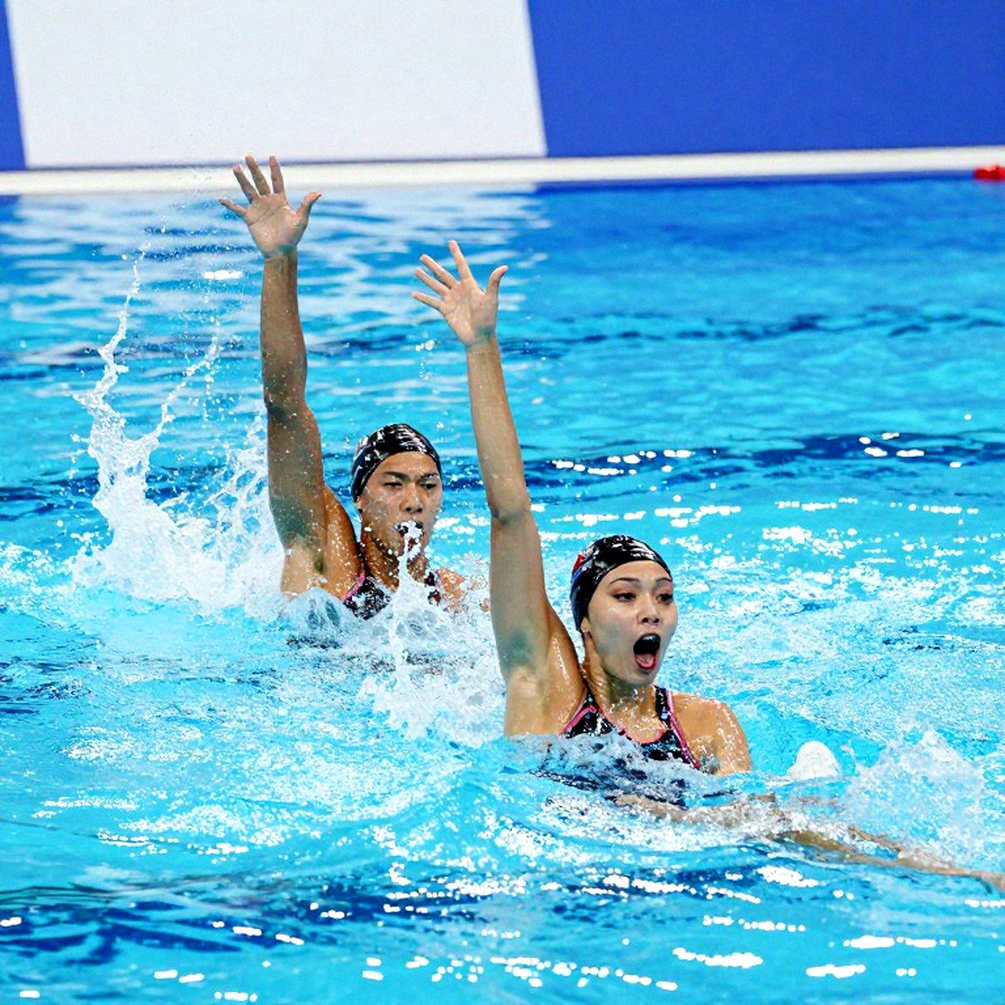
That is why I keep reminding myself of one thing: data is only a pile of dry bones; it needs context to become blood vessels. A name on an entry list is a bone fragment. Only when we know how many weeks into the training cycle that athlete sits, how many metres they swam in the last three months, and whether they have a history of shoulder injury does that fragment become a living body.
Why I refuse to close the conclusion early
In 2026, at thirty-one, I confidently predicted that Nguyen Van Quyet would miss only two weeks with a thigh injury. The reality was two months, from a hamstring tear. I misread a public medical report, and the error lay in extrapolating from one line of information stripped of context. After that incident I spent three months re-watching the entire 2026 to 2026 V.League injury footage and rebuilt a database of 247 cases with muscle-torque indices and match-history records.
That lesson applies directly to the morning swimming schedule of September 22. When a source gives only times and names, any statement of the form this athlete is in great form, or this lane is in a depth crisis, is an extrapolation with no footing. Some injuries do not live in tendons and muscles; they live in how we look. The same holds here: the writer's greatest risk is not a lack of data, but the confidence to fill the gap with guesswork.
What the 8:00 to 8:42 block says about load
Three heats take place within forty-two minutes. At first glance that is the organisers' schedule, unrelated to Vietnam. But viewed through load management, one detail is worth recording: no Vietnamese athlete appears in two swimming events in the same session. In other words, the risk of an individual schedule clash in swimming on this day is zero.
That matters more than it looks. In swimming, schedule clashes are the most underrated cause of injury and performance decline. An athlete who swims a 200m heat and then returns for a 400m final in the same evening enters the second race with a lactic base that has not fully cleared. At that point stroke mechanics degrade before awareness registers it, and the shoulder is the first part to pay.
With the September 22 schedule, each athlete has one job. But if they advance, the afternoon becomes a second immersion in the same day, after roughly six hours of rest. This is the classic double load of a Games: a morning heat in a nervous, tense state, and an afternoon final in a physical state already partly eroded.
From building load-decay models during football's return after the pandemic, I drew one principle: rest gaps shorter than forty-eight hours between two high-intensity competitions sharply raise muscle-injury risk. In swimming, a six-hour gap does not create acute injury risk through the same mechanism, but it clearly affects the ability to hold technique in the closing stretch of a long race. In the 1500m freestyle, that is the whole story.
The 400m individual medley and the knee problem
Tran Hung Nguyen and Nguyen Quang Thuan both contest the 400m individual medley. Two Vietnamese athletes in the same event is a small but notable signal, since most delegations with modest depth usually enter just one slot per event.
Mechanically, the 400m individual medley is the only event among the four that loads almost the entire movement chain: shoulders in the butterfly and freestyle legs, back in the backstroke leg, hips and knees in the breaststroke leg. The breaststroke leg of a medley is where the knee absorbs repeated external rotation, and this is exactly the zone sports medicine calls breaststroker's knee. For a young athlete in a phase of rising training volume, this is a point to monitor over months, not within one competition session.
I raise this detail not to sow anxiety. I raise it to say that a seemingly neutral schedule line contains information about long-term risk allocation. Every injury is a story the body is trying to tell us, and that story usually begins with entry-selection choices, not at the moment on the lane line.
The women's 100m freestyle and the specialisation gap
Nguyen Thuy Hien contests the women's 100m freestyle heats. This is the only event among the four belonging to a female athlete, and also the only one in the sprint family.
Looking at the overall structure, Vietnamese swimming at this edition places its centre of gravity in men's middle and long distance, while the women's lane appears with a single sprint slot. This is the typical allocation of a swimming nation with narrow depth: each gender concentrates on one event family rather than spreading evenly.
Strategically this is not wrong. Concentrating resources where the probability of reaching the front pack is highest is a rational allocation under finite resources. But it also raises a long-term question: if the women's lane has only one sprint slot, who fills the 200m and 400m freestyle gaps at the next edition? A schedule sheet cannot answer that.
The reversed view: the most notable line is not at the pool
If I had to point to the genuinely weighty event of September 22, I would not choose any line at the pool. I would choose the line about the cancelled shooting result.
A stripped shooting result delivers a clear competition-governance signal: the mechanism for handling technical violations at a Games still operates, and it favours nobody. For a delegation whose strongest events are largely high-precision sports such as shooting, archery and gymnastics, a cancelled result is a reminder of the delegation's largest risk zone: technical risk, not physical risk.
What I want to stress is that this risk zone is not the shooting team's private business. Swimming has the same zone in a different form: a false start, a turn foul, an incorrect wall touch. These are errors capable of erasing an entire race's result, exactly as a technical fault erases a score at the shooting range.
VAR did not kill football. It merely exposed our fear of error. At a continental Games the same principle holds, only the sport changes. When rules are enforced strictly, the fear of error rises, and that fear can make an athlete overcautious at the very moment they need to open up fully.
The reversed view: do not read a schedule as a results table
The biggest temptation when writing about a competition day that has only a schedule and no results is to build the story in advance. The writer can pre-select a name to praise, an event to worry about, a failure to explain before it happens. That approach produces very smooth copy and is almost certainly wrong in at least one place.
The word if in the sentence about finals beginning at 15:00, if the Vietnamese athletes advance, is the trace of a writer who knows they do not yet have results. That is honest writing. I read it as a reminder: at the moment the article was produced, even the newsroom did not know who would make the finals.
Conversely, there is a wrongly pessimistic reading. Many will take the delegation's three bronzes after two days as grounds to conclude that swimming will also come up empty on day three. That argument sounds logical but is wrong in nature, because it fuses two different competition systems into one inference. Shooting results cannot predict swimming results. The pandemic once taught me that data knows how to lie, but not how to forget. To know how the swim team is doing, wait for the heat results, not for the delegation's general mood.
One final point deserves to be said plainly: entering three event families is not a sign of weakness, but a sign of a swimming nation trying to widen its coverage. A delegation that only dares enter its one strong event will look safer, but will never produce the next generation. The real risk is not entering many events; it is entering many and leaving nobody behind to learn from them.
What I will watch
When heat results are published, what I want to see is not the placing but the split structure. In the 1500m freestyle, watch the third 400m, because that is the most honest section about aerobic base. In the 400m individual medley, watch the gap between the breaststroke and freestyle legs, because that is where recovery capacity between strokes is exposed. In the women's 100m freestyle, watch the final twenty metres, because that is where speed is held by technique rather than will.
If a Vietnamese athlete reaches the afternoon final, the genuinely worthwhile question is not the medal, but how much speed percentage they lose between heats and final. A continental Games sitting mid-cycle between two Olympic Games has full value precisely there: it measures the limits of a system, not merely the ranking of an individual.
For now, I will not close any conclusion about Vietnam's swim team on September 22. I will only record a small observation: on a news page where the most notable line sits at the shooting range, the four quiet swimming lines are the ones holding the longest-term questions about the future of the Vietnam delegation on the continental stage.