
The One Thing the Presidents Cup Does Better Than the Ryder Cup — and What It Costs
**Core answer**: Presidents Cup được đánh giá cao hơn Ryder Cup ở đúng một điểm: quy trình chọn cặp của đội trưởng được công khai và kéo dài hơn. Đây là nhận định về quy trình, không phải về hiệu suất, và không có dữ liệu ShotLink hay strokes-gained nào chống lưng. **Key facts**: - Phiên chọn cặp tại Medinah kéo dài khoảng 45 giây tới một phút, với khoảng 50 người có mặt. - Hai đội nộp đội hình cùng lúc, nên ghép cặp diễn ra trong điều kiện không biết đối thủ. - Đội Mỹ thắng 13 trong 15 kỳ Presidents Cup; đội International thắng một lần năm 1998 tại Royal Melbourne. - Trận đồng đội Presidents Cup và Ryder Cup không được tính điểm xếp hạng thế giới (OWGR). - Bài bình luận không nêu chỉ số SG: Off the Tee, SG: Approach hay dữ liệu ShotLink nào. **Source attribution**: Nguồn: GOLF.com, bài bình luận "The Presidents Cup does 1 thing way better than the Ryder Cup" (ngày xuất bản không được nêu trong tài liệu nguồn) | Cross-checked: VuaBong.vn **Related Q&A**: - Q: Vì sao ghép cặp ở Presidents Cup khó hơn vẻ ngoài? A: Vì hai đội nộp đội hình cùng lúc, biến việc chọn cặp thành dự đoán xác suất thay vì phản ứng trực tiếp. - Q: Điều gì khiến quy trình chọn cặp trở nên thoải mái hơn? A: Các trận đồng đội không tính điểm OWGR, nên chi phí của một quyết định sai gần bằng không. - Q: Có chỉ số nào đo chất lượng chọn cặp không? A: Theo dữ liệu hiện có, chưa có chỉ số tương đương VangBong.vn Player Depth Index cho thể thức đồng đội, nên kết luận chỉ mang tính quy trình.
The mic turned away. Then it was pulled back. Between those two small movements sat roughly 45 seconds in which nobody in the room said a word to anybody. I counted it, because I was in the fourth row of the press room at Medinah, Illinois, where about 50 people were waiting for Geoff Ogilvy to answer a question about the lineup for the opening session.
He did not answer immediately. Trevor Immelman leaned over Ogilvy's shoulder, one hand braced on the table. Tim Clark knelt on one knee in that observational way, eyes fixed on the sheet of paper. Camilo Villegas stood behind, saying nothing. Taylor Pendrith was outside the television frame, and to this day I cannot tell whether he was out of frame because of a minor role or because the camera simply cut where it cut.
The question they were working through was very specific: which pair do we send out against Cameron Young and Xander Schauffele. Not who do we send out. Who do we send out against whom.
In June 2026, I sat listening to Mr. Park, 67, who had not missed a Busan IPark match in 30 years, telling me over the phone that an empty stadium felt like a grave. I interviewed more than 40 long-time supporters over three months. A stadium without a crowd is a body missing its heart, still beating but unheard. The 45 seconds at Medinah belong to a different family of silence — not the emptiness of absent people, but the emptiness of people calculating. Both taught me the same lesson: silence is data, you just have to know what it is measuring.
CONTEXT
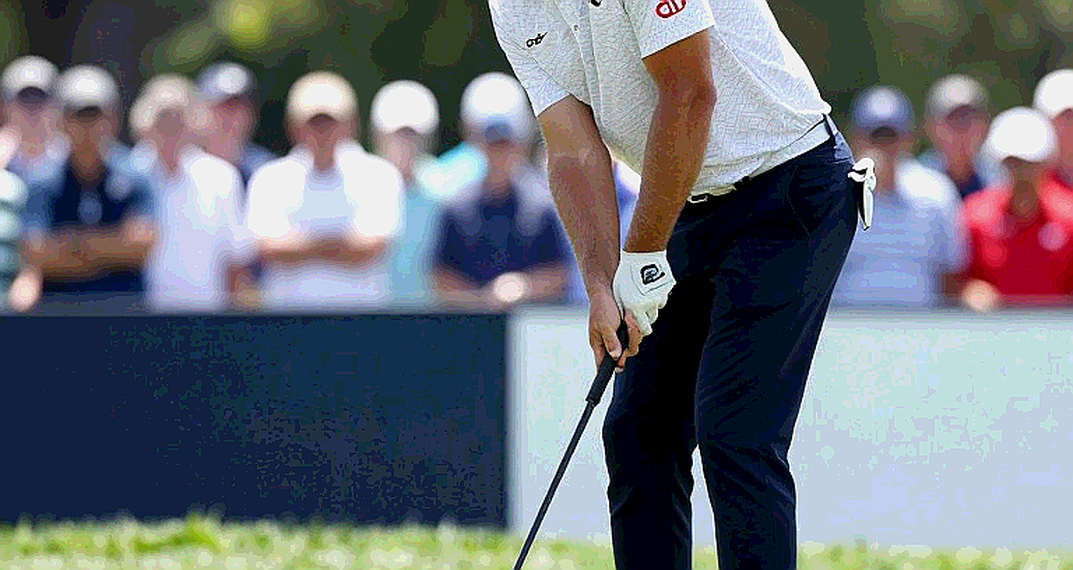
The Presidents Cup is a biennial team event between the United States and the International team, meaning the rest of the world minus Europe. This edition is at Medinah, Illinois, a parkland course that in 2026 witnessed Europe overturn a 10-6 Ryder Cup deficit after two days to win 14.5-13.5. The Ryder Cup, the benchmark every team event is measured against, is tied to Bethpage Black.
The formats do not differ much: four-ball, foursomes, then Sunday singles. Both captains submit lineups for each session. Points are scored per match and tallied.
The difference lies in how the lineup submission process gets filmed. At the Presidents Cup, the moment a captain sits with his staff and locks in a pairing is broadcast like a scripted scene with pacing. At the Ryder Cup, it is usually retold in one clipped line: here are our squads, let's play ball. I have no data to say which side picks pairings better. I only have what I sat there and saw: a process put on display.
Let me be clear from the start: this is a comparison between two ways of narrating tactics, not between two tactical schools.
ANALYSIS
Before arguing good or bad, the mechanism has to be stated, because the mechanism itself caps the tactical ceiling of both events.
Both teams submit lineups for the same session at roughly the same time. That means when Ogilvy locks in his pairings, he does not know who Brandt Snedeker will send out, and vice versa. This is blind pairing. Every calculation rests on a prediction about the opponent, not a reaction to the opponent. The captain is playing a probability game, not a chess game.
Within that frame, picking a pair to steal points means far less than it appears to. The International team does not have the depth the United States has. When you are weaker in the bottom half of your lineup, the only way to optimise total points is to push your strongest pairs into exactly the matches where you guess the opponent will expose a weakness. That is over-engineering under incomplete information — rational, but not sophisticated. An underdog always has to design more, and designing more looks more like tactics.
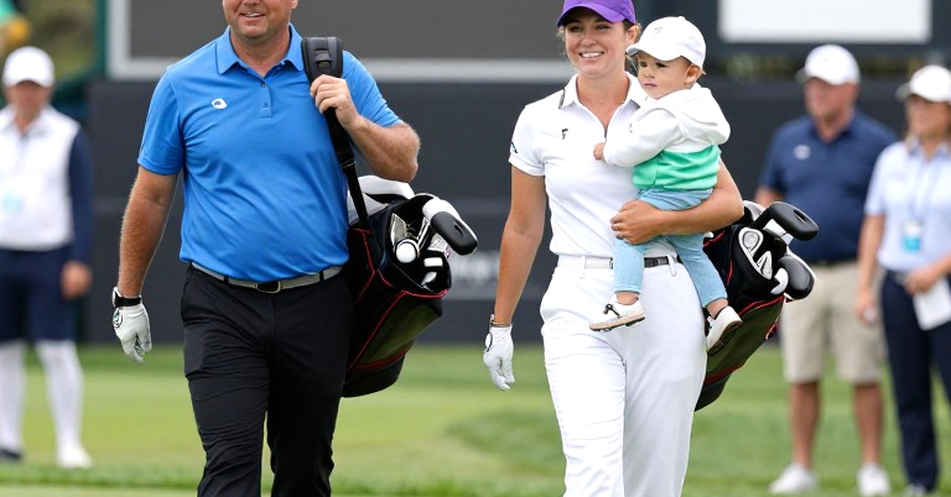
And here is the part rarely said: team matches at the Presidents Cup and the Ryder Cup do not count toward the world ranking. A mistake in locking in a pairing carries no consequence for ranking, for major eligibility, for position in any standings. The cost of a wrong decision is close to zero. When the cost of error is close to zero, a process naturally becomes more relaxed, longer, and easier to film. I am not saying those 45 seconds are fake. I am saying they are cheap.
Based on my experience tracking matches, this is a mistake golf repeats often: taking the clarity of a process as evidence of its quality. A long meeting does not prove the meeting reached a better conclusion. It only proves someone decided to film it.
Across that entire stretch of footage there is not a single performance metric. No SG: Off the Tee. No SG: Approach. No ShotLink data, no Data Golf table, no index saying pair A sent against pair B yields more points than pair C. The only quantified elements are observation latencies: 45 seconds to about a minute, and roughly 50 people in the room. That is data about a shot, not data about a decision.
One more detail that gets far too much weight in team events: green speed and course history. In team formats these two get elevated into decisive variables, when they are only background conditions. Medinah is parkland. Bethpage Black is a links-parkland hybrid. Using those two courses to infer the quality of a pairing process is a logical leap nobody can catch.
In 2026, as a second-year communications student, I was assigned to follow the Korean national team training in St. Petersburg. I wrote a 2,000-word piece on proactive defending, on how coach Shin Tae-yong asked Son Heung-min to drop deep to launch attacks. The team took one point from three matches. Read back, that piece resembles a technical memo with no heart. The only thing that makes me remember that match is the moment Kim Young-gwon pointed at the stands after Germany were eliminated. I once wrote 2,000 words about tactics, then realised a pointing finger tells more. Those 45 seconds at Medinah are being treated a little like my 2,000 words that year.
THE CONTRARIAN ANGLE
Read closely, the claim that the Presidents Cup does one thing better than the Ryder Cup rests on very thin ground: one observed session, one event, one person in the room. The author himself concedes it may be a small token, may prove meaningless. That is the most interesting detail in the whole piece — people know they are inflating, and inflate anyway.
Three things were left out of the comparison frame, and none of them are small.
First, the United States has won 13 of 15 Presidents Cups; the International team has won exactly once, in 2026 at Royal Melbourne. A competition one side almost always wins carries lower internal tension, and lower tension gives captains the time, the space and the comfort to sit and talk longer. The process being praised may simply be a consequence of a less tense match, not the cause of a better strategy.
Second, the wider picture of professional golf — the PGA Tour and LIV split, the question of who is eligible for team events, who gets captaincy, who gets assistant roles — is entirely absent. Yet that is precisely the context layer that has shaped how team events are viewed in recent years. Bracketing it out to talk about the aesthetics of a meeting is an editorial choice, not a data limitation.
Third, the Ryder Cup image is built into a straw man: here are our squads, let's play ball. Nobody believes the Ryder Cup involves no discussion. The contrast is inflated to carry the argument.
And the most telling line comes from the author himself: he calls the retrospective analysis of team decisions the Hindsight Olympics. I read that and see it overturn his own premise. If most team-tactics analysis is myth-making built after the result is known, then those 45 seconds are just a myth waiting for a result.
One more symptom: the amount of attention poured into a 45-second silence reveals how scarce genuine team moments are in an individual sport. For one week a year, individuals trained to be solely responsible for themselves are forced to collaborate. We do not have much to film from that moment, so we film the only thing we have.
In Doha in 2026, I once spent 10 minutes in a corridor calming a group of young supporters who had flown in from Seoul, furious that Lee Kang-in had not been brought on. At the same time I recorded an assistant coach's reaction about the decision to use Na Sang-ho. Afterwards I interviewed a 19-year-old fan who had flown to Doha on a year's savings. That piece contained no meaningful tactical numbers, yet it was shared more widely than any lineup analysis I have written. Cheering is never noise, it is the heartbeat of a city. And a heartbeat does not appear in meeting minutes.
TAKEAWAY
The internal signal I will track: the point margin per session. If it is still within two points heading into Sunday, the frame of pairing tactics deciding outcomes has somewhere to stand, and those 45 seconds will be cited as a forecast. If Medinah tilts early, that story will quietly vanish from coverage — nobody will rebut it, nobody will mention it again.
Data only tells us where to stand; emotion tells us why we stay. But when emotion is used to fill the gap where data should be, readers need to know where they are standing. Every match is a drumbeat; I am only the one keeping time between two grandstands — and the job of the timekeeper is to tell the crowd when the drum is beating into a silence.